WHAT DOES CELTIC JEWELRY MEAN?

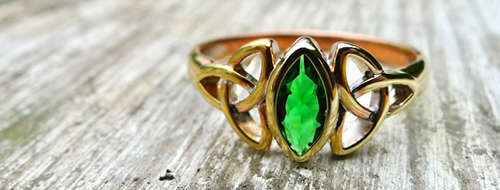
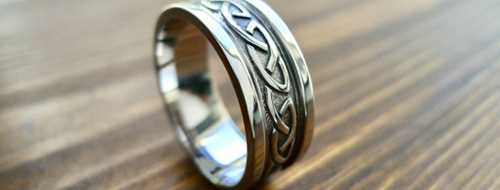
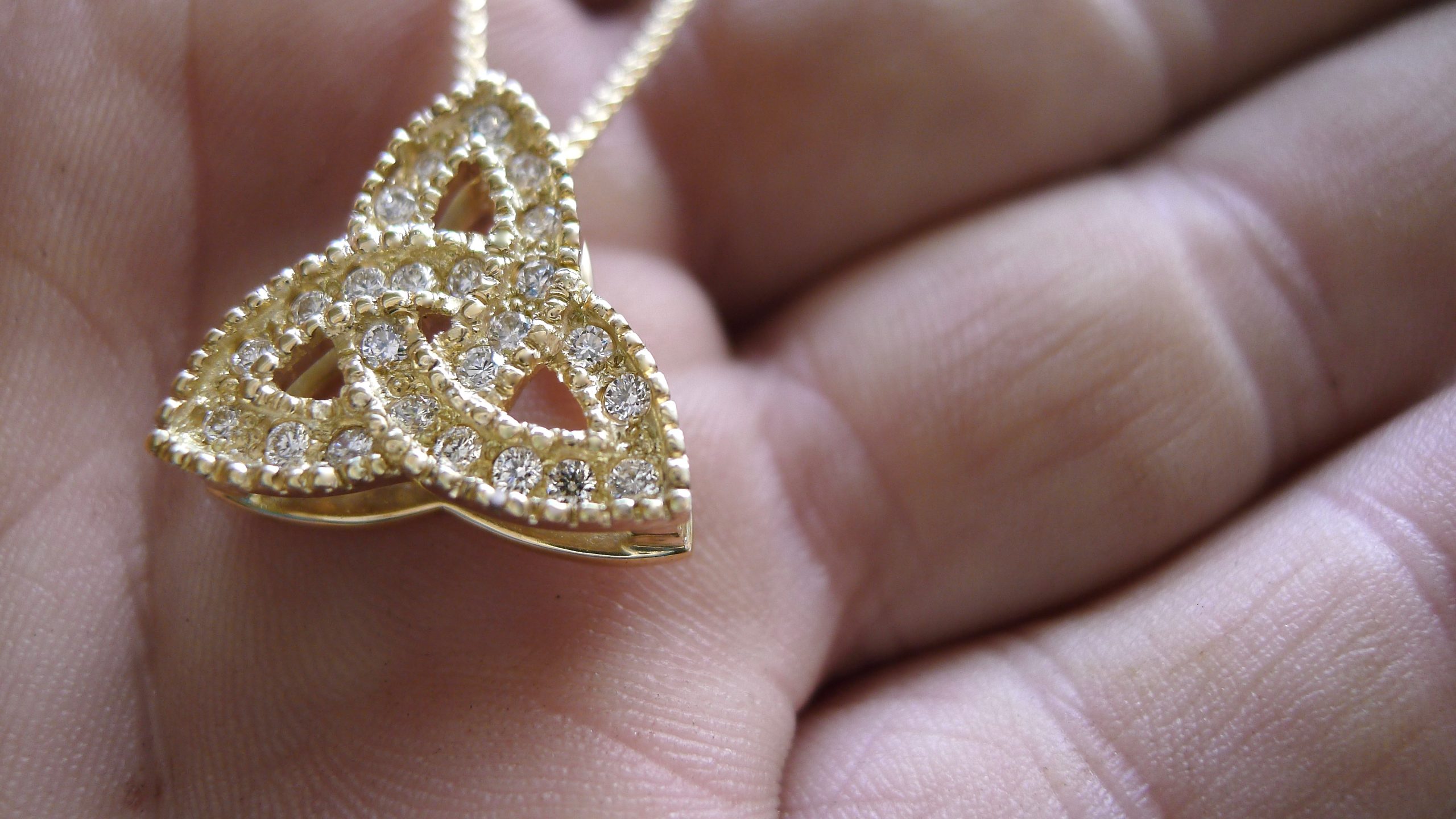
Celtic jewelry refers to jewelry that is inspired by the art, culture, and history of the Celtic people.The Celts were a group of tribal societies that lived in Europe during the Iron Age and the Middle Ages. They had a rich and distinctive culture that was known for its art, music, mythology, and spirituality. In particular, the Celts were known for their intricate and ornate metalwork, which included Celtic jewelry made from gold, silver, and bronze. Celtic jewelry often incorporates motifs and designs that are inspired by Celtic mythology, such as knots, spirals, and animal figures. It is often characterized by its intricate and detailed craftsmanship, as well as its symbolic and cultural significance

Read More

TUNGSTEN

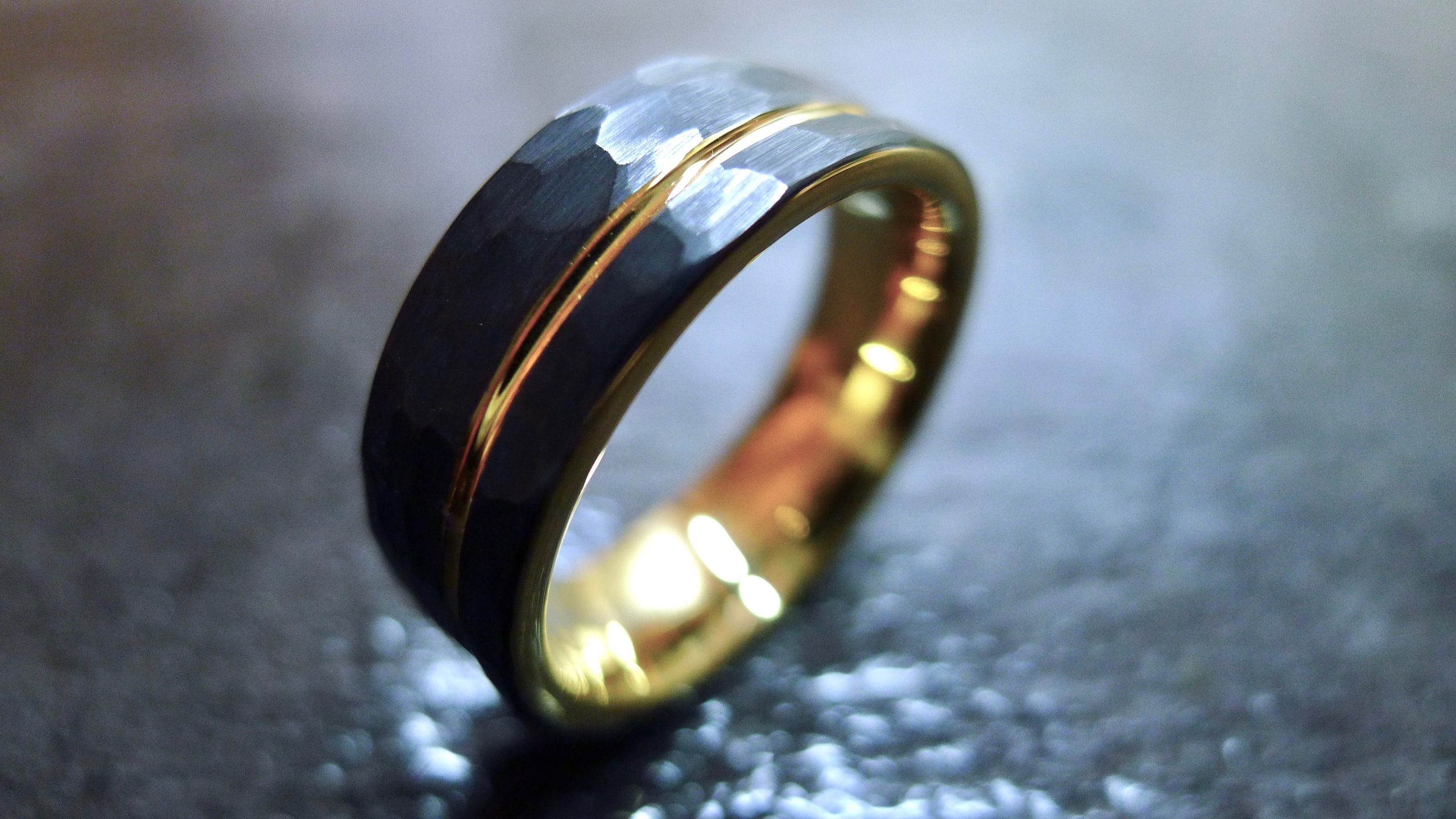
Tungsten is a type of metal that has been used in the jewelry industry for many years. It is known for its durability and strength, making it an excellent choice for wedding bands and other types of jewelry. The history of tungsten jewelry dates back to the early 20th century, when tungsten carbide was first used in the manufacturing of industrial tools. Tungsten carbide is a compound made up of tungsten and carbon atoms, and it is known for its extreme hardness and resistance to wear. In the 1980s, tungsten carbide began to be used in the production of jewelry, including wedding bands. Tungsten wedding bands quickly gained popularity due to their durability and the fact that they could be crafted into a variety of styles and designs. Today, tungsten wedding bands are a popular choice for couples looking for a durable and stylish alternative to traditional gold or platinum bands. One example of a tungsten wedding band is a ring that is inlaid with gold. This type of ring combines the durability of tungsten with the beauty and symbolism of gold. The gold inlay may be a thin strip of gold that runs around the center of the ring, or it may be a series of gold accents or patterns on the surface of the ring. Tungsten jewelry is often associated with strength and durability, making it a popular choice for wedding bands and other types of jewelry. It is also an affordable alternative to gold and platinum, making it a more accessible option for many people. If you are considering a tungsten wedding band, be sure to do your research and choose a reputable jeweler to ensure that you are getting a high-quality piece of jewelry.

Read More

THE IRISH CLADDAGH RING

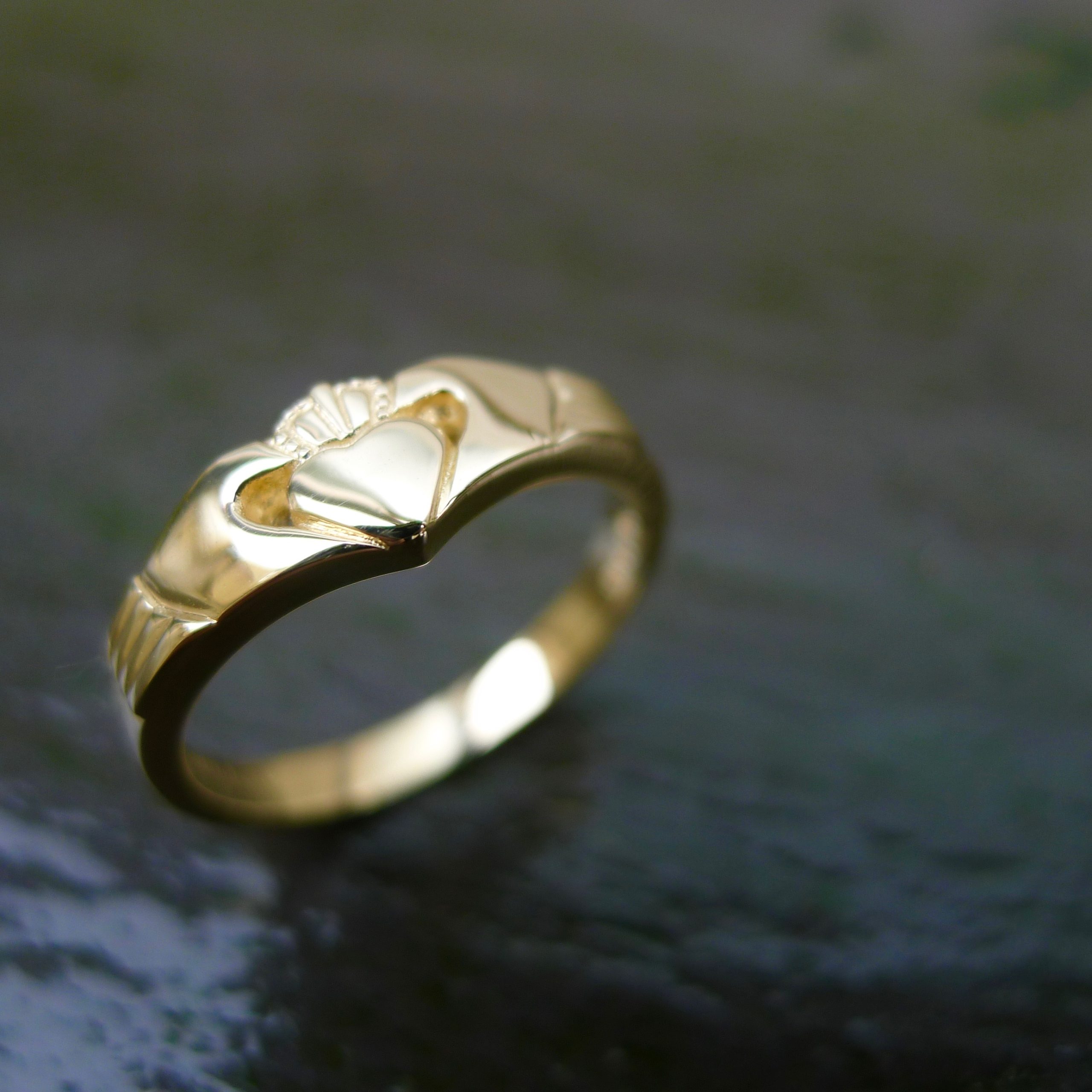
The Claddagh ring is a traditional Irish ring that has been worn for centuries, and has become a symbol of love, loyalty, and friendship. The ring features two hands clasping a heart, with a crown on top. But what is the history behind this iconic piece of jewelry, and how has it been used in Ireland over the years? The Claddagh ring is believed to have originated in the small fishing village of Claddagh, located just outside of Galway city in the West of Ireland. The ring is said to have been first crafted by a local goldsmith named Richard Joyce, who was captured by pirates and forced to work as a slave in a Moorish goldsmith’s workshop. While in captivity, Joyce learned the art of goldsmithing, and upon his release, returned to Claddagh and began crafting the rings as a symbol of love and loyalty. The design of the Claddagh ring is steeped in symbolism. The hands represent friendship, the heart represents love, and the crown represents loyalty. The Claddagh ring was traditionally worn as a symbol of love and loyalty by men and women, and was often given as a gift to a loved one, or worn as a symbol of one’s own feelings. In Ireland, the Claddagh ring has a long history of use as a wedding ring. In the past, it was common for couples to exchange Claddagh rings as a symbol of their commitment to each other. The ring would be worn with the heart facing inwards towards the wrist if the wearer was not yet married, and then turned outward towards the fingertips if they were. In addition to its use as a symbol of love and loyalty, the Claddagh ring has also been used as a symbol of Irish heritage. Many Irish people, both in Ireland and abroad, wear the Claddagh ring as a symbol of their connection to their homeland. The Claddagh ring is also traditionally used in formal situations. it is a common gift for Confirmations, graduations, and other important life events. It is also a popular gift for those celebrating a milestone birthday or for a significant anniversary. Nowadays, the Claddagh ring is worn by people all over the world and has been adopted as a symbol of Irish heritage and culture. Its popularity has only grown in recent years, and it can be found in a wide range of styles and materials, from traditional gold and silver to modern stainless steel and titanium. Whether you’re Irish or not, the Claddagh ring is a beautiful symbol of love, loyalty, and friendship that has stood the test of time. It is a charming reminder of the rich culture and heritage of Ireland and can be passed down through generations as a cherished family heirloom.

Read More

THE MAKING OF THE SAM MAGUIRE CUP

The Sam Maguire Cup is one of the most iconic symbols in Irish sport. The cup, which is awarded to the winners of the All-Ireland Senior Football Championship, has a rich history and an interesting backstory. The cup was first presented in 1928 by a group of London-based Irishmen, led by Sam Maguire, a former player and administrator from County Cork. Maguire, who had passed away the previous year, had been a strong advocate for the promotion of Irish sports and culture, and the group felt that a cup named in his honor would be a fitting tribute. The original cup was made of silver and stood at 18 inches tall. It was designed by the renowned Irish silversmith, Robert Garratt, and featured intricate Celtic knotwork and the GAA crest. The cup was donated to the Gaelic Athletic Association (GAA), the governing body of Irish sport, and has been awarded to the winners of the All-Ireland Senior Football Championship ever since. Over the years, the cup has undergone several changes. In 1988, the GAA commissioned Desmond A. Byrne to craft a new cup , as the original had become worn and was in need of replacement. The new cup, which is still in use today, was made of sterling silver and is slightly larger than the original, measuring 20 inches tall. The design remains largely the same, with the addition of the GAA’s new logo. The manufacturing of the Sam Maguire Cup is an important process and was done by highly skilled craftsmen. The cup is made of sheet silver, which is carefully raised using hammer blows and then shaped into the final form. The intricate Celtic knotwork and GAA crest are then added, using a process known as repoussé. This involves hammering the silver from the reverse side, creating a raised design on the front. The cup is then engraved and finished to a high standard, before being presented to the winning team. The Sam Maguire Cup has become a symbol of Irish pride and is one of the most sought-after prizes in Irish sport. The making of the cup is a testament to the skill and craftsmanship of the Irish people and is a fitting tribute to the legacy of Sam Maguire. It is how I ended up a gold and silversmith as the maker was my master and I his apprentice. I did not have a hand in the making, but seeing it before it was finished drew me in to this trade and the making of Irish jewellery.

Read More

CELTIC TREE OF LIFE JEWELLERY

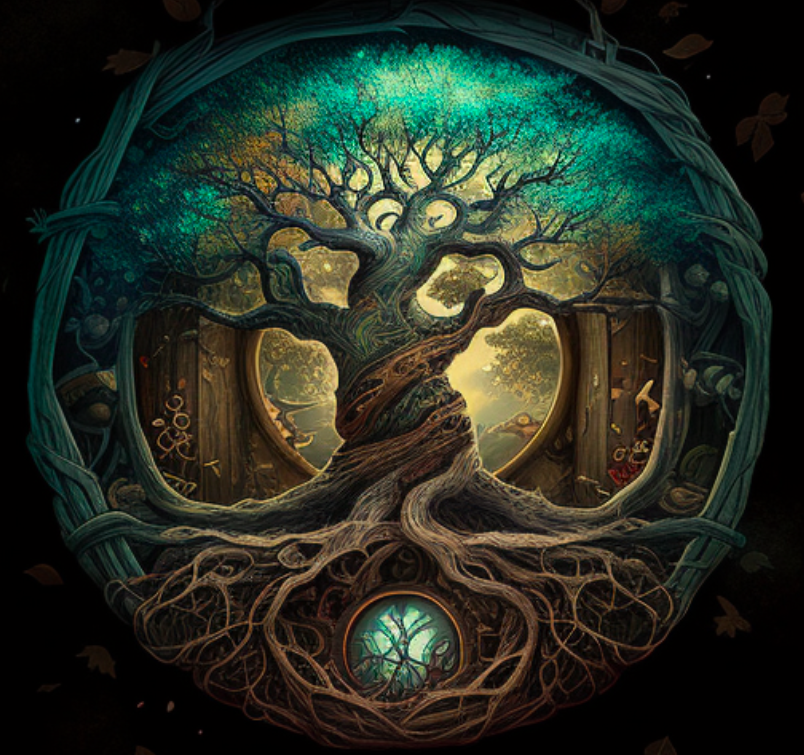
The Tree of Life is a powerful symbol with deep roots in many cultures, including that of the Celts. It represents the connection between the earth and the heavens, the past and the future, and the physical and spiritual realms. The Celts believed that the tree was a bridge between the mortal and immortal worlds, and that it held the key to understanding the mysteries of existence. In Celtic art, the tree is often depicted as a tall, slender trunk with branches reaching up to the sky. Its leaves and branches are intricately detailed and its roots extend deep into the earth. This imagery represents the idea that the tree is a link between the earth and the heavens, and that it connects the physical and spiritual realms. The Celts believed that the tree was a symbol of the continuity of life and that it embodied the cycle of birth, death, and rebirth. The Tree of Life is also associated with the idea of the world tree, which is a central axis that runs through the universe and connects all living things. This idea is reflected in the way the tree is often depicted in Celtic art as a central figure surrounded by other elements, such as animals and humans. The tree is seen as a source of wisdom, strength, and protection for those who are connected to it. In Celtic jewellery, the Tree of Life is often used as a decorative element or as a central motif. The tree is often depicted in intricate detail, with its branches and leaves rendered in intricate patterns. It is often used in pendants and rings, and is often accompanied by other symbols such as the triskele, which is a symbol of the cycle of life and rebirth. The Tree of Life has a deep meaning and significance in the Celtic culture and it continues to be a popular symbol in modern times. It is a symbol of continuity and connection, representing the idea that all living things are connected and that we are all part of the same cycle of life. The use of the tree in Celtic jewellery is a way to carry this powerful symbol with us, serving as a reminder of our connection to the earth and the spiritual realm. In conclusion, the Tree of Life is a powerful and meaningful symbol in the Celtic culture. It represents the connection between the earth and the heavens, the physical and spiritual realms, and the past and future. Its intricate depiction in Celtic jewellery serves as a reminder of the continuity of life and our connection to the earth and the spiritual realm. It continues to be a popular symbol in modern times, and its use in Celtic jewellery is a way to carry its powerful meaning with us wherever we go.

Read More

THE ROBIN MEANING IN JEWELLERY

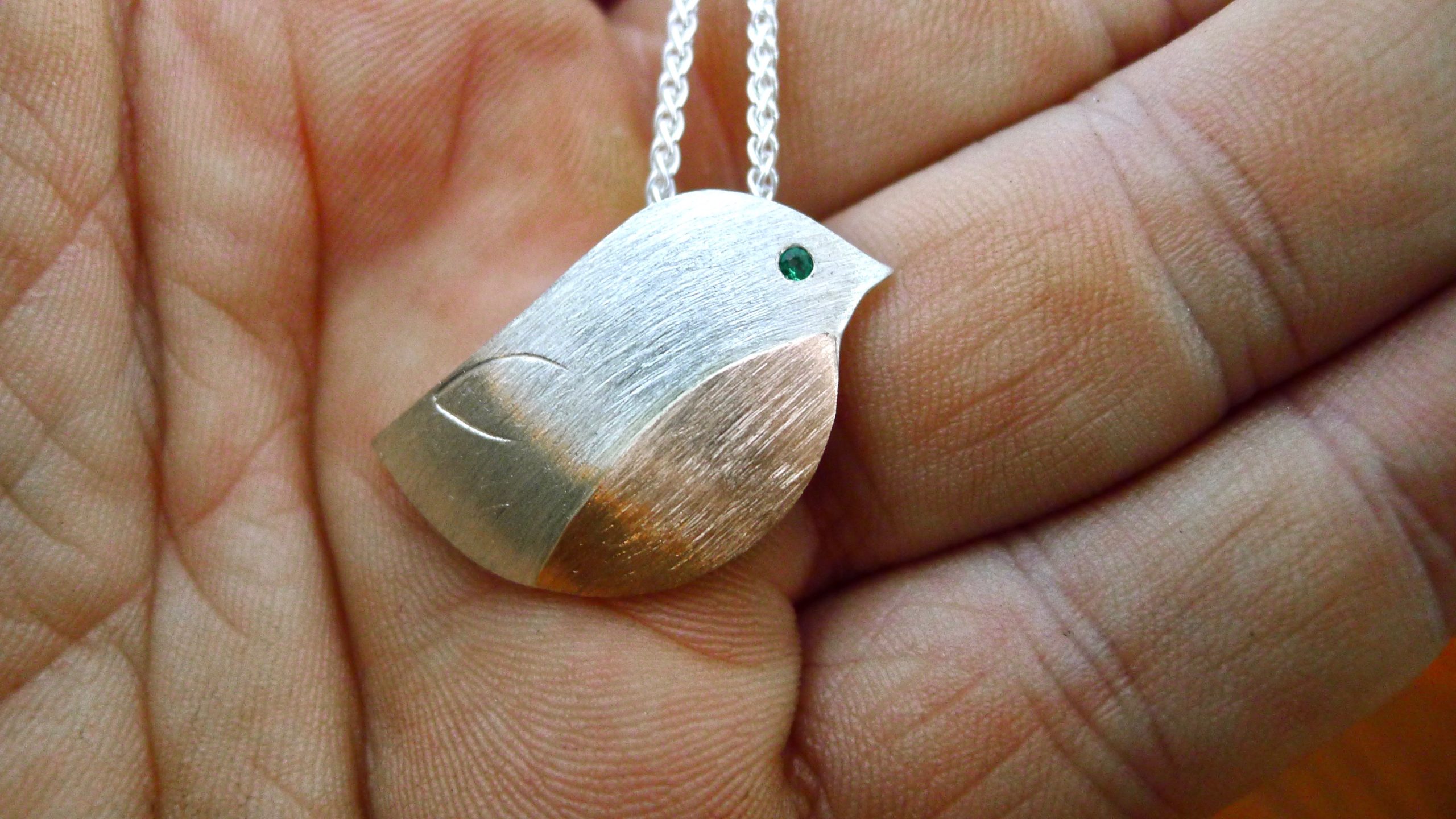
The Robin, a small bird with a distinctive red breast, is a popular symbol in jewellery. This bird has been featured in jewelry for centuries, and is often used to represent different things depending on the context in which it is used. One of the most common meanings associated with the robin in jewelry is love and affection. The red breast of the bird is thought to symbolize the warmth and passion of love, and the bird itself is often used to represent the love between two people. This can be seen in many different types of jewelry, including engagement rings, wedding bands, and pendants. Another meaning associated with the robin in jewelry is hope and renewal. The robin is often associated with the springtime, and the arrival of the bird is seen as a sign of the coming of warmer weather and new growth. This can be seen in jewelry that features the robin as a symbol of hope and renewal after a difficult time. The robin is also associated with freedom, this meaning can be seen in jewelry that features the bird in flight, as a symbol of the freedom to fly and explore. Additionally, the robin is a symbol of good luck and prosperity. The robin is often featured on lucky charms, such as charms for bracelets and necklaces, as a symbol of good luck and prosperity. This meaning can also be seen in jewelry that features the robin as a talisman or amulet to protect the wearer and bring good luck. In-fact, the robin is a popular symbol in jewellery, and its meaning can vary depending on the context in which it is used. The robin is often associated with love, hope, renewal, freedom, good luck and prosperity, and these meanings can be seen in a variety of Irish jewellery styles and designs.

Read More

HISTORY OF GOLD IRISH JEWELLERY

Gold mining and jewellery making in Ireland has an ancient history dating back more than five thousand years. The Celts, who inhabited Ireland from around 600 BC, were extremely skilled metalworkers and created intricate Irish gold jewellery, weapons and Celtic brooches. They also mined for gold and used it to create coins and other items of high value that they could easily carry – such as gold torcs and bracelets. During the medieval period, gold mining in Ireland continued to thrive. The country was known for its Irish goldsmiths, who produced extremely high-quality jewellery and other gold items. Many of these goldsmiths were in fact monks, who used their skills to create chalices, goblet and Celtic crosses. In the modern era, gold mining in Ireland has declined significantly. However, the country still has a strong tradition of goldsmithing and jewellery making. Irish goldsmiths are known for their skill and craftsmanship, and the country is home to a number of jewellery schools and workshops. I often use Irish gold mined from Irish soil in my jewellery designs. One of the most famous examples of Irish goldsmithing is the famous “Celtic Knot” jewellery, which is still widely produced and worn today. This jewellery features intricate Celtic knotwork designs that are said to have symbolic meaning. Overall, gold mining and Irish jewellery making have played a significant role in Ireland’s history and culture. Though the industry has declined, the tradition of goldsmithing and jewellery making remains strong, and Irish goldsmiths that are still renowned for their skill and craftsmanship.

Read More

JANUARY BIRTHSTONE. GARNET

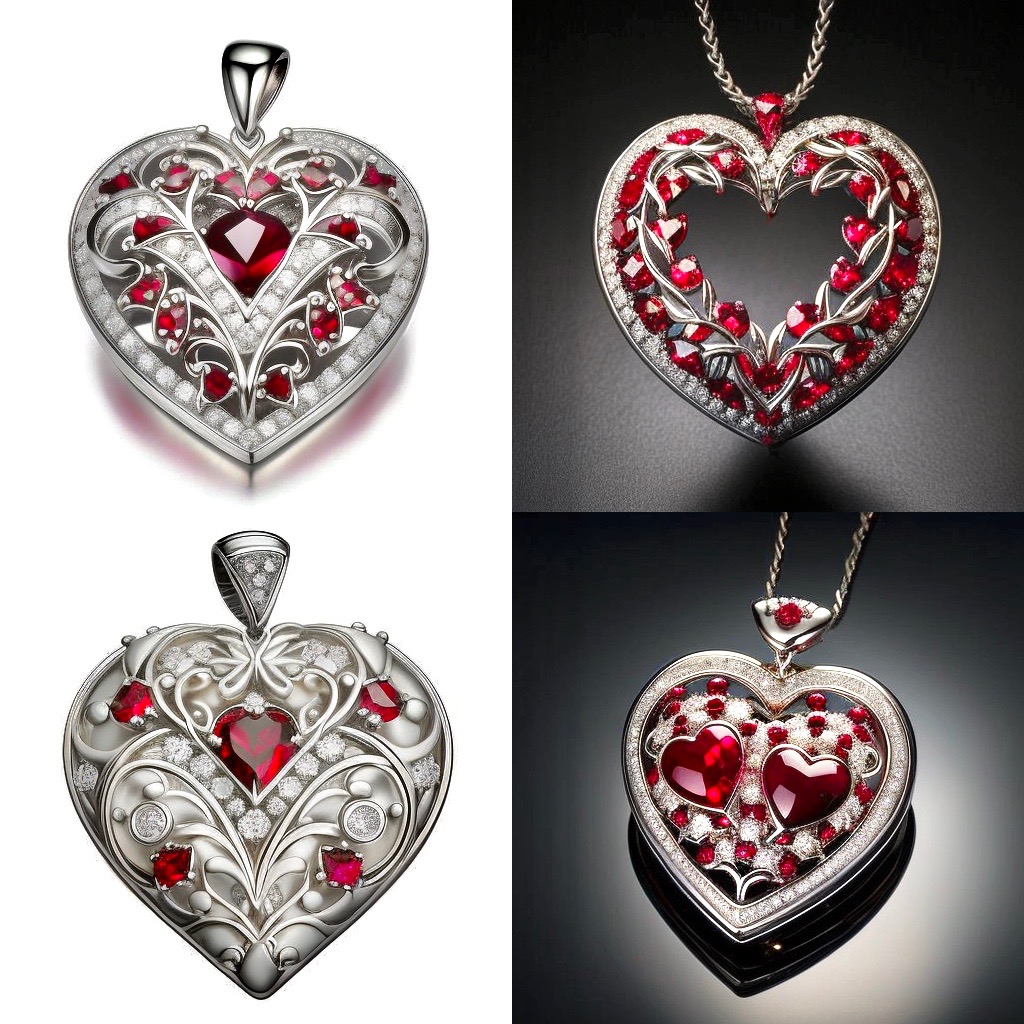
Garnet is a beautiful gemstone that has been used in Irish jewelry for centuries. The name “garnet” comes from the Latin word “granatum,” meaning “seed,” as the gemstone resembles a dark red pomegranate seed. Garnet is known for its rich red color, but it can also be found in shades of orange, yellow, green, and even purple. The most common type of garnet is pyrope, which has a deep red color. Another popular type is almandine, which has a reddish-brown color. Spessartine garnet has an orange or yellow color, and demantoid garnet has a green color. Garnet is a versatile gemstone that can be used in a variety of jewelry styles. It is a popular choice for rings, earrings, bracelets, and pendants. It is also a popular choice for men’s jewelry, as it adds a touch of color and sophistication to any outfit. Garnet is also known for its healing properties. It is said to help with blood flow, energy, and emotional balance. It is also believed to help with grounding and protection. When it comes to caring for garnet jewelry, it is important to avoid exposing it to harsh chemicals and high temperatures. Cleaning it with warm water and a mild soap is usually enough to keep it looking its best. Overall, garnet is a beautiful and versatile gemstone that can add a touch of color and elegance to any Irish jewelry collection. Its healing properties and durability make it an excellent choice for any occasion.

Read More

ERIU, QUEEN OF IRELAND

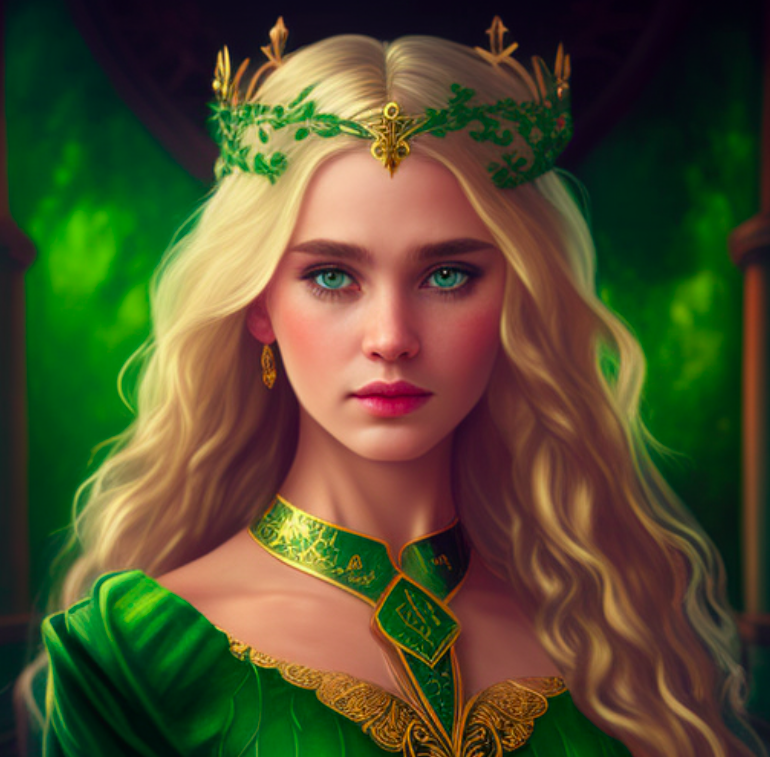
Ireland’s name comes from the Old Irish “Ériu”, the name of the Gaelic goddess who was said to be the mother and protector of the island. Ireland was also known by the name “Iouernia” in ancient Roman texts, and “Hibernia” in medieval Latin texts, both of which are thought to be derived from the same root as  the beautiful Goddess”Ériu”. Eriu, also spelled Ériu, was a goddess who, along with her sisters Banba and Fódla, was said to be one of the three queens of the island of Ireland. According to legend, this island was named after Eriu. Eriu, Banba and Fódla were daughters of Ernmas, a goddess of the Tuatha Dé Danann, one of the groups of deities in Irish mythology. They were said to have lived on the island before the arrival of the Milesians, the ancestors of the Irish people. I The goddesses were said to have put a curse on the Milesians, promising that their descendants would never truly be rulers of the island as long as the goddesses’ names were remembered. Eriu, Banba and Fódla were also associated with the land and fertility, and were often invoked in poetry and song for blessings on the land and its people. In some texts, Eriu is also described as a goddess of sovereignty, and is associated with the sovereignty of the island of Ireland. Eriu is an important figure in Irish mythology and she continues to be celebrated in modern times. The name of the goddess is still used to refer to the island of Ireland in modern Irish language (Éire).

Read More

TAKING CARE OF YOUR IRISH JEWELLERY

Irish and Celtic jewelry is a beautiful and meaningful way to express your heritage and connection to Ireland and the Celtic culture. However, like all jewelry, it requires proper care and maintenance to keep it looking its best. Here are some tips for caring for and maintaining your Irish and Celtic jewelry collection: Clean your jewelry regularly: Use a soft cloth or a very soft brush to gently wipe away dirt and grime. Avoid using abrasive materials or chemicals, as they can damage the metal or gemstones. For gold jewelry, you can use a mild soap and warm water to gently clean the piece. Store your jewelry properly: Keep your jewelry in a dry, cool place, away from direct sunlight and heat. Avoid storing it in damp or humid areas, as this can cause tarnishing or damage to the metal. Use a jewelry box or a special jewelry pouch to protect your pieces from scratches and damage. Be mindful of how you wear your jewelry: Avoid wearing your jewelry in the shower or swimming pool, as the water can cause damage to the metal or gemstones. Also, avoid wearing your jewelry while doing activities that may cause scratches or other damage. Get professional cleaning and maintenance: Get your jewelry professionally cleaned and checked for damage or wear every few years. I can inspect the piece for any damage or wear and can make any necessary repairs. Be mindful of the materials of the jewelry. Sterling silver for example needs to be protected from tarnishing. Silver will turn black over time or if it is exposed to sweat, chlorine products, or any lotions containing sulphur. You can use a anti-tarnish strip or a special polishing cloth to keep your silver jewelry looking shiny and new. By following these tips, you can help ensure that your Irish and Celtic jewelry collection stays in beautiful condition for years to come. Enjoy wearing your jewelry, but also take the time to care for it properly so that it can be passed down to future generations

Read More